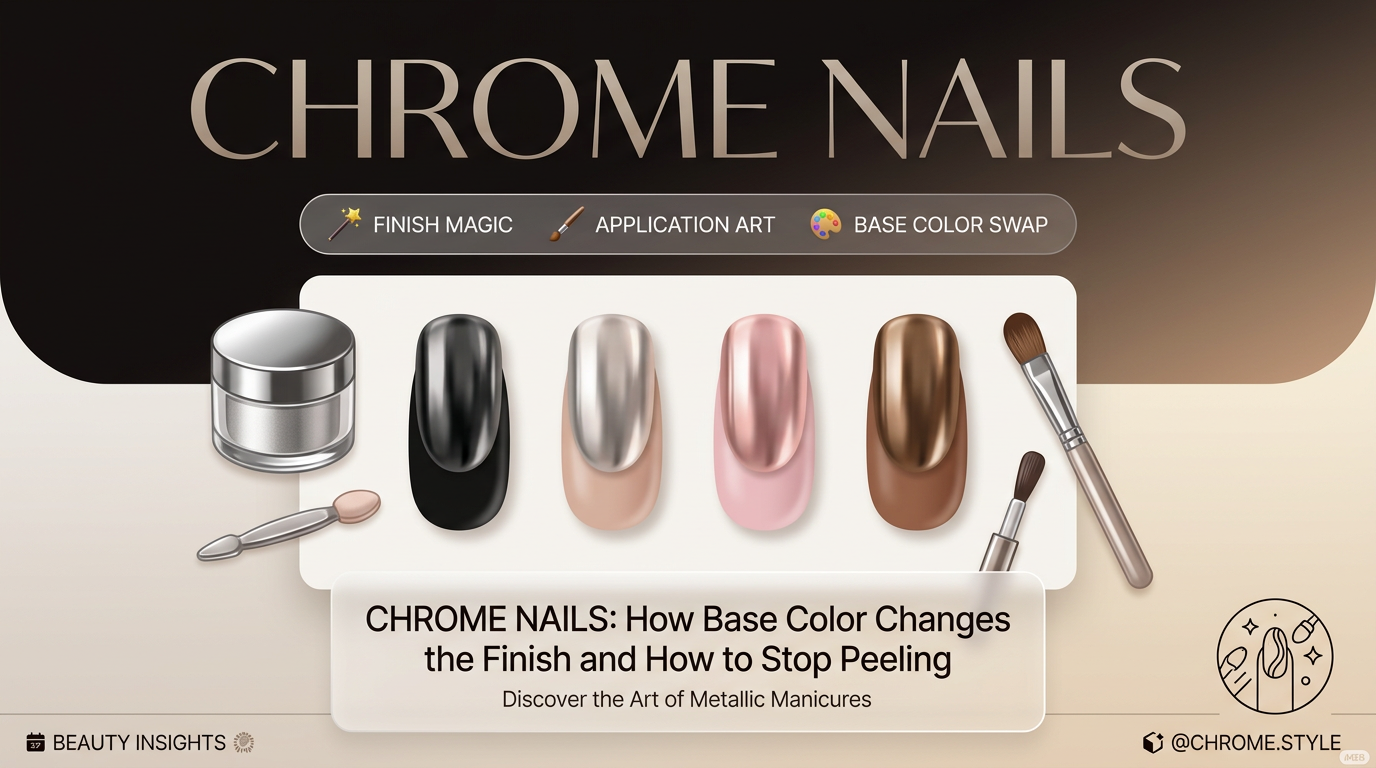
Chrome nails look simple from a distance. Up close, they are one of the easiest manicure styles to get wrong.
The powder goes on grainy. The shine looks dull instead of glassy. The tips start peeling by day four. Or you copy a photo of soft pearl chrome and end up with something much colder and brighter than you wanted.
That gap usually comes from one missing piece: people talk about the chrome powder, but the base color does a huge amount of the work.
If you understand what the base is doing, chrome gets much easier to choose and much easier to apply.
The Short Answer
Chrome nails are never only about the powder.
The final look comes from three layers working together:
the base color; the chrome powder itself; the top coat and sealing method
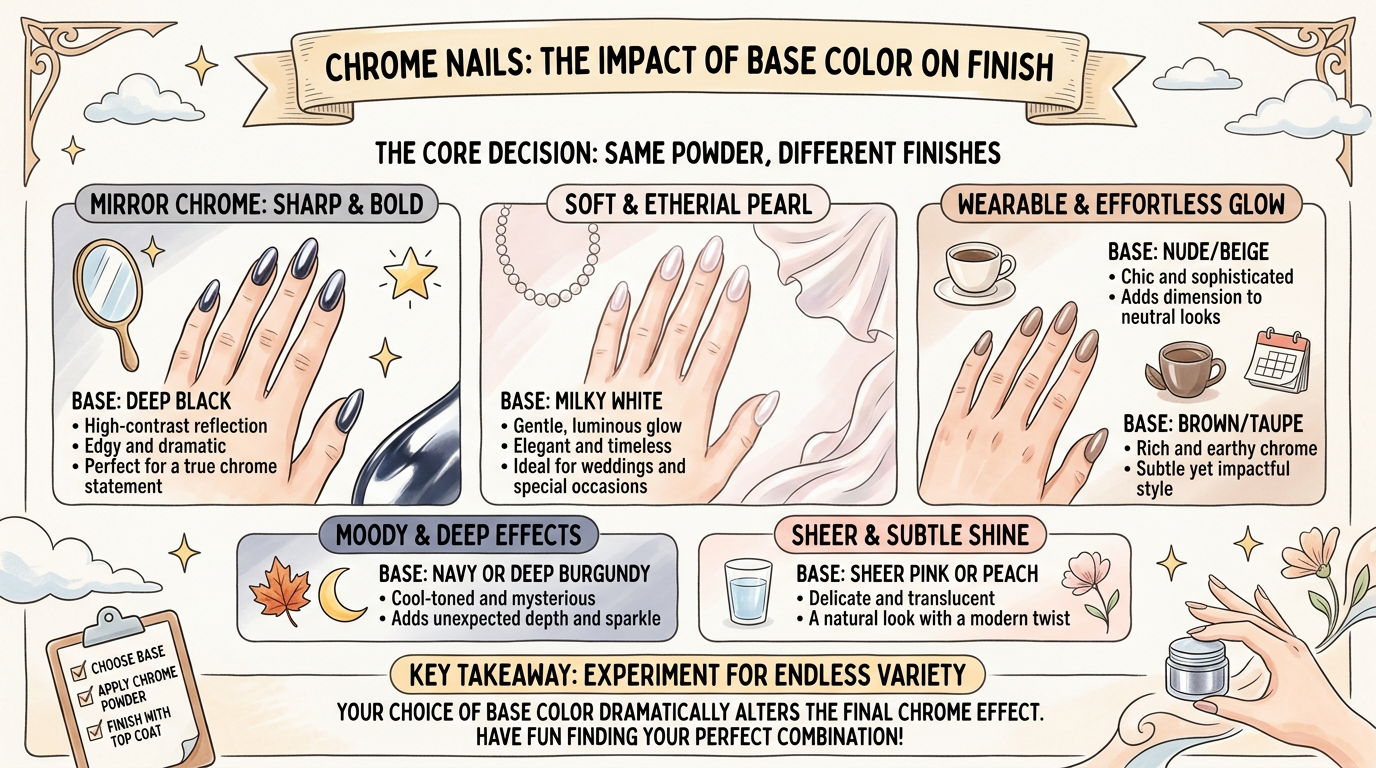
Use the same silver or pearl chrome over black, nude, pink, navy, or brown, and you get different manicures. That is why salon inspiration photos can look similar at first and completely different on your hand.
If you want the safest chrome finish for most skin tones, start with a sheer pink, beige nude, or milky white base and add a soft pearl chrome on top.
If you want a true mirror effect, use a black base.
What Chrome Nails Actually Are
Chrome nails are usually made by rubbing a very fine powder over a cured no-wipe top coat. The powder catches onto that smooth surface and creates the reflective effect. Then you seal it again.
That sounds straightforward. The small failures happen before the powder even touches the nail.
Poor prep, the wrong top coat, uncapped edges, leftover oil, or over-buffing can all ruin the finish fast.
So can a base color that fights your goal.
How Base Color Changes the Chrome Result
This is the part most people should learn first.
Black Base
Black gives the strongest mirror look.
It makes silver chrome look sharper, icier, and more metallic. It also makes colored chrome look deeper and richer. If you want that liquid metal finish people notice from across the room, black is the base to use.
Downside: every flaw shows more clearly. Uneven powder, patchy sidewalls, and tip wear stand out on dark chrome.
White or Milky White Base
This gives chrome a softer, cleaner finish.
Use it for:
glazed donut nails; pearl chrome; bridal chrome; pale opal effects
The result looks lighter and more diffused than chrome over black. That is why it feels more wearable for everyday sets.
Sheer Pink Base
This is the safe choice for subtle chrome.
A sheer pink under pearl powder gives that healthy, polished finish that made glazed nails so popular. It flatters a lot of skin tones and grows out better than harder metallic looks.
Nude Beige or Taupe Base
This creates a softer editorial chrome. Less icy. More expensive-looking.
It works especially well if:
you wear short nails; you want office-friendly shine; you like neutral, brown, or quiet luxury manicures
Brown, Burgundy, Navy, or Green Base
This is how chrome starts looking moodier and more seasonal.
One silver powder can read chocolate, gunmetal, forest, or deep wine depending on the base. If you like trend-driven chrome but do not want a drawer full of powders, start changing the base before you buy more pigments.
The Best Chrome Nail Looks by Goal
The finish matters more than the trend name. Start with the outcome you want.
If You Want Classic Mirror Chrome
Use:
black gel base; silver chrome powder; very smooth no-wipe top coat
This gives the highest contrast and the sharpest reflection.
If You Want Glazed Donut Nails
Use:
sheer pink or milky white base; pearl chrome; rounded or almond shape
This finish looks cleaner when the nail shape is soft, not harshly square.
If You Want Warm, Rich Chrome
Use:
brown, caramel, or burgundy base; gold or champagne chrome; medium shine top coat
Warm chrome often looks better on warm or olive skin than bright silver.
If You Want Short Chrome Nails That Still Feel Wearable
Use:
nude base; thin chrome layer; short squoval or round shape
Full mirror chrome on short nails can still work, but a softer base usually makes the manicure feel more polished and less costume-like.
The Application Order That Gives the Best Finish
Chrome is unforgiving. Clean steps matter.
Here is the basic gel order:
Prep the nail plate and remove dust and oil.; Apply base coat and cure.; Apply color base and cure fully.; Apply a smooth no-wipe top coat and cure.; Rub chrome powder onto the cured surface using a sponge applicator or gloved finger.; Brush off loose powder.; Seal the edges.; Add another top coat and cure again.
The two places people usually rush are step four and step seven.
If the no-wipe top coat is not smooth, the chrome grabs unevenly. If the free edge is not sealed, peeling starts there first.
Why Chrome Nails Peel So Fast
Most chrome wear problems are predictable.
1. The Edge Was Not Capped Properly
Chrome finishes are vulnerable at the tips. If the top coat does not fully wrap the free edge, water and friction get in fast.
2. The Nail Surface Still Had Oil or Dust
Chrome only looks clean over a clean foundation. Leftover cuticle dust and oil near the sidewalls often lead to early lifting.
3. The Top Coat Was Wrong
Some top coats dull the chrome. Some crack more easily. Some do not hold the powder well enough for long wear.
If a chrome set keeps failing, question the top coat first.
4. The Powder Was Applied Too Heavily
More powder does not mean more shine. Too much can make the finish look rough and make sealing harder.
5. The Nail Got Buffed Too Aggressively Before Sealing
Overworking chrome can break the mirror effect and create weak patches.
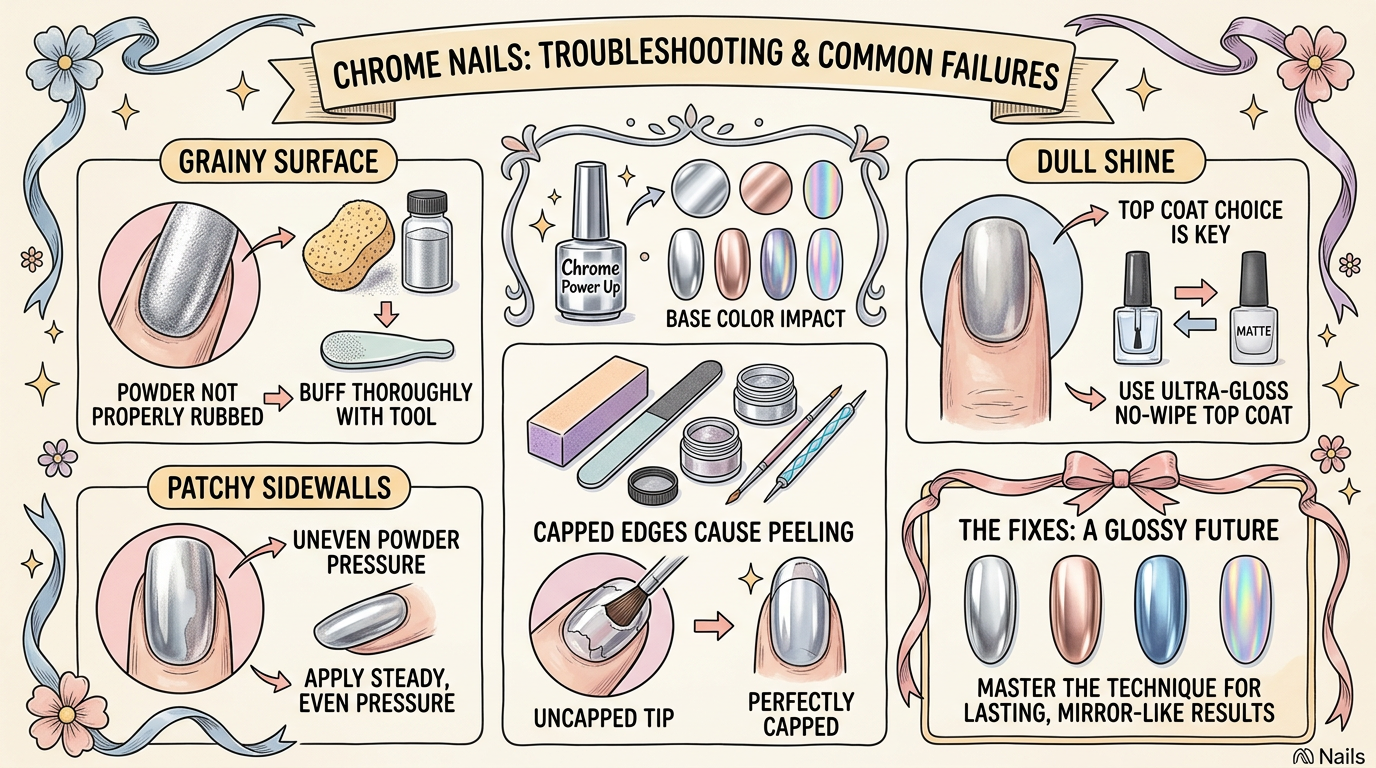
A Simple Chrome Troubleshooting Matrix
If the finish looks wrong, the cause is usually easy to narrow down.
Grainy Surface
Possible cause:
top coat not smooth enough; chrome rubbed too early or too late; powder quality too coarse
What to fix:
use a smoother no-wipe top coat; test cure timing; apply lighter pressure when rubbing
Dull Shine
Possible cause:
wrong top coat; too much loose powder left behind; low-quality applicator
What to fix:
switch top coat; dust off fully before sealing; apply chrome more evenly
Peeling at the Tips
Possible cause:
uncapped free edge; tip wear from typing, cans, or picking; thin seal at the edge
What to fix:
cap both top coat layers; keep chrome slightly back from the edge if needed; use gloves for cleaning
Patchy Sidewalls
Possible cause:
incomplete base coverage; skin contact during prep; powder not pressed in evenly
What to fix:
clean sidewalls better; keep product off skin; use smaller applicator pressure near edges
Gel vs Non-Gel Chrome Nails
Most high-shine chrome is still easiest with gel. That is the honest answer.
Gel gives you:
longer working time; a smoother cured surface; better grip for powder; better wear
Non-gel chrome can still work, but the look is usually softer and less mirror-like. Chrome effect polishes, metallic powders designed for regular lacquer, and pearly toppers are the better route for people who avoid UV lamps.
If you want a salon-level mirror finish at home, gel is still the most reliable path.
The Best Chrome Shade for Your Skin Tone
This matters more than people think.
Cool or Pink Undertones
Best bets:
silver chrome; pearl chrome; icy lavender chrome; blue-toned gunmetal
Warm or Golden Undertones
Best bets:
champagne chrome; rose gold chrome; bronze chrome; caramel glaze
Neutral Undertones
You can wear almost anything, but the base color will still decide whether the set feels warm or cold.
If you are unsure, start with a neutral nude base and a soft pearl chrome. It is hard to make that combination look wrong.
Chrome Nail Ideas That Age Better Than Trend Bait
Some chrome sets still look good in six months. Some look dated the minute the next social cycle turns.
The most durable options are:
glazed nude chrome; chrome French tips; soft pearl short nails; deep brown chrome; silver chrome over a sheer base
The looks that date faster are usually the ones stacked with too many trend signals at once: 3D gel, chrome, charms, aura, and an extra cat-eye stripe on top.
You can do one bold idea. Five at once is usually where the manicure starts wearing you.
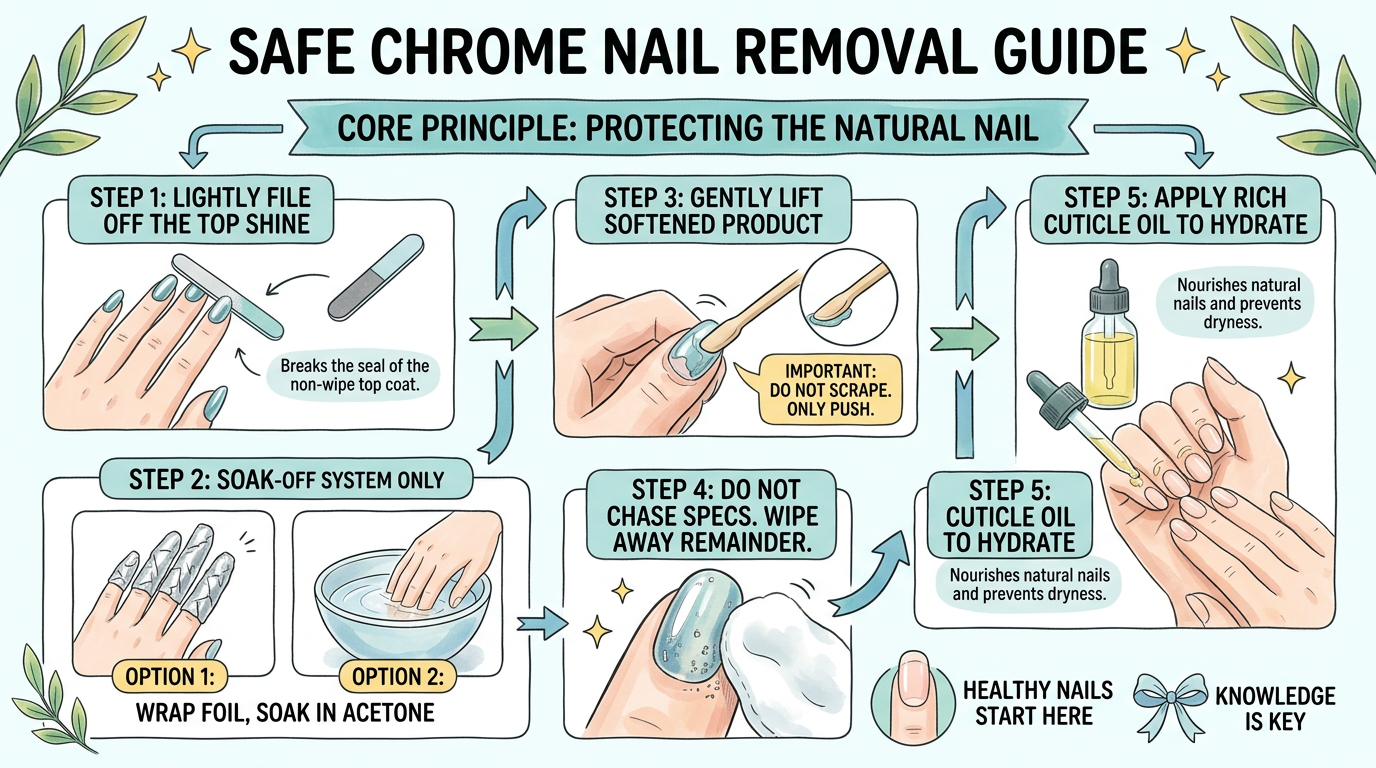
Removal Without Ruining the Nail Plate
Chrome sets often get damaged during removal, not during wear.
If the manicure is gel-based, remove it the same way you would remove gel polish or hard-gel overlay, depending on the system underneath. Do not keep buffing the surface until the chrome disappears and the nail feels thin.
The safer approach:
File the sealed shine layer gently.; Soak or wrap if the base system is soak-off gel.; Lift softened product carefully.; Re-wrap if needed.; Finish with cuticle oil.
If it is builder gel or another non-soak-off system, file down carefully or have it removed professionally.
The biggest mistake is chasing every reflective speck until you have overfiled the natural nail.
What to Buy First If You Want Chrome at Home
Keep the kit tight.
Start with:
one pearl chrome; one silver chrome; black gel color; sheer pink or milky white gel color; a reliable no-wipe top coat; sponge applicators; lint-free wipes
That small setup already gives you a wide range of looks because the base does so much of the visual work.
The Best Chrome Nail Strategy for Most People
If you want chrome nails that are flattering, wearable, and less likely to peel early, do this:
Use a sheer pink, beige nude, or milky white base. Add a thin pearl chrome. Seal the free edge carefully. Keep the shape short almond, oval, or soft square.
That gets you the shine people actually keep asking for. Not the version that looks dramatic for a photo and annoying by the end of the week.