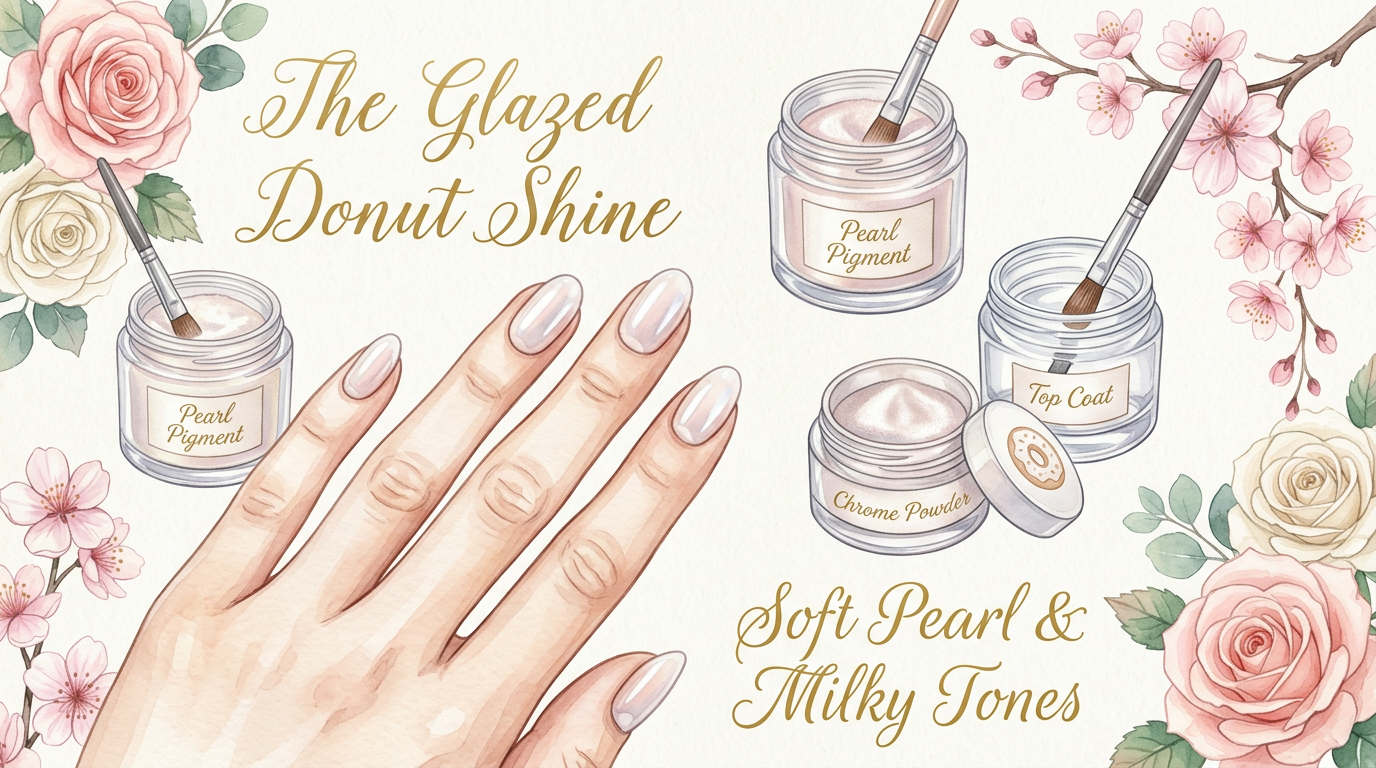
Glazed donut nails have been around long enough to stop feeling like a one-week celebrity trick.
That usually means one of two things. Either the trend is basically over, or it has settled into something more useful. In this case, it is the second one. The glazed finish works because it is easy to wear, easy to soften, and flattering on a lot of nail lengths when it is done well.
The problem is the "done well" part.
A lot of people ask for glazed donut nails and end up with something too silver, too chalky, or too frosty for the clean skin-like shine they actually wanted. At home, the usual failure is different. The powder looks gritty, the white base turns flat, or the whole thing starts peeling at the tips before the week is over.
That is why a gallery of pretty photos is not enough. You need to know what makes the glaze look soft instead of metallic, and what makes it stay on.
The Short Answer
If you want the classic glazed donut nail look, use:
a sheer pink, milky white, or soft beige base; a pearl or off-white chrome powder; a very smooth no-wipe top coat; a thin final seal over the edge
That is the formula behind the clean glazed finish people usually mean.
If your glaze keeps looking grey, the base is often too cool, too opaque, or too dark for the powder you used. If it keeps peeling, the top coat and edge sealing are usually the weak spots.
What Glazed Donut Nails Actually Are
Glazed donut nails sit in the space between a nude manicure and a full chrome manicure.
The finish should look glossy, pearly, and lit from the surface. Not mirror-like. Not glittery. Not metallic in a hard way. It is closer to a soft shell sheen than a silver foil shine.
That is why the best glazed sets usually start with a sheer base. You want light to move across the nail, not bounce off a dense block of color.
Why Some Glazed Nails Look Expensive and Some Look Dusty
The trend is simple, but the visual balance is picky.
A strong glaze depends on four things:
base color depth; powder tone; surface smoothness; how much powder you rub in
If any one of those is off, the manicure changes fast.
The dusty version usually happens when:
the base is too stark white; the powder leans too silver for the skin tone; the top coat is not smooth enough; too much powder sits on top instead of buffing in cleanly
The expensive-looking version usually stays in a softer zone:
sheer base; pearl chrome instead of hard silver; thin, even application; clean glossy seal
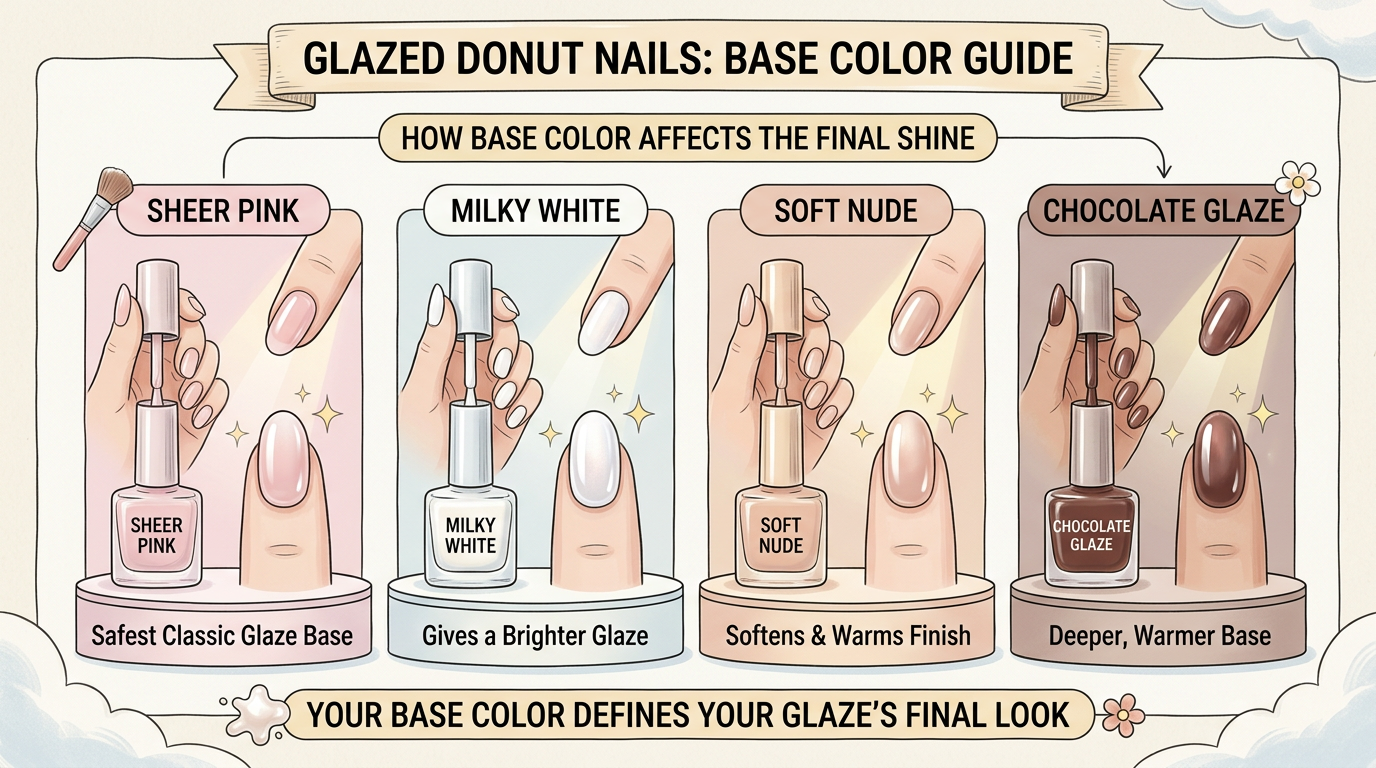
The Best Base Color for Glazed Donut Nails
This matters more than the chrome powder itself.
Sheer Pink
This is still the safest base for most people.
It gives the nail bed a healthy look and keeps the pearl finish from turning flat. If you want that "your nails, but cleaner and brighter" result, start here.
Best for:
everyday glazed nails; bridal nails; short almond or oval nails; cool or neutral undertones
Milky White
This gives the most classic Hailey-style glazed look, but it is also the easiest to get wrong.
If the white is too opaque, the glaze can turn chalky instead of glossy. The better version is a semi-sheer milk tone that lets a little softness show through.
Best for:
cleaner high-contrast glaze; summer and bridal sets; longer oval or almond nails
Beige or Soft Nude
This is one of the most underrated glazed bases.
A nude base can make the whole finish look warmer, softer, and more office-friendly. It also tends to age better than bright white if you want the set to work for more than one event.
Best for:
warm or olive undertones; short nails; workwear-friendly manicures; fall or year-round neutral styling
Chocolate, Strawberry, and Other Color Variations
This is where glazed donut nails stop being one trend and start becoming a finish family.
Chocolate glaze, strawberry glaze, lemon glaze, and soft lavender glaze all work on the same principle. The finish stays pearly, but the base shifts the mood.
The mistake is treating every variation like it should still look white and icy. It should not. A good chocolate glaze should feel rich and warm, not pale under brown.
Which Nail Shapes Make Glazed Nails Look Best
The shine reads differently depending on shape.
Short Oval and Short Almond
Probably the best default.
These shapes let the light move across the nail without the finish looking too flat or too wide. They also suit the softer, cleaner mood of the trend.
Round
Very wearable, especially for natural nails.
Round glazed nails look neat and healthy. They do not chase drama. That is part of the appeal.
Long Almond
This shape makes the glaze look more editorial and polished.
If you want the trend to feel dressier, longer almond usually gives the nicest light play.
Square
Square can still work, but the finish needs more control.
On a broad square nail, the glaze can look flatter and colder if the base is too pale. A warmer nude or pink base helps.
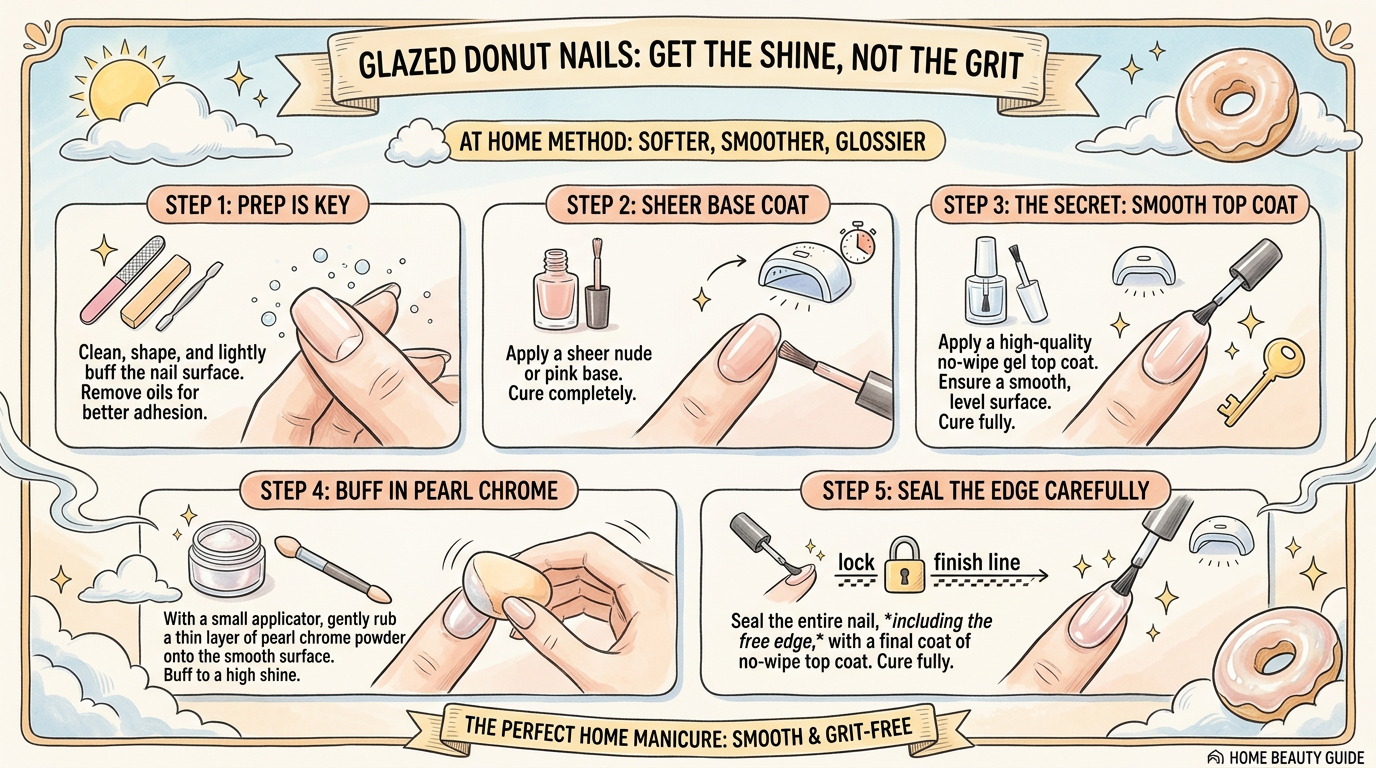
How to Do Glazed Donut Nails at Home
This is the cleanest home route for most people using gel.
Step 1: Prep the Nail Properly
Shape the edge, clean the plate, and remove dust and oil. Glazed finishes expose rough prep fast because the shine draws attention to every bump.
Step 2: Apply a Sheer Base
Use one or two thin layers of sheer pink, milky white, or nude. Cure each layer fully.
The point is to build a soft background, not a block of color.
Step 3: Use a Smooth No-Wipe Top Coat
This is one of the biggest make-or-break points.
If the surface is uneven, the powder grabs in patches. If the top coat is the wrong formula, the powder can slide, dull out, or peel sooner.
Step 4: Rub in a Pearl Chrome Powder
Use a sponge applicator or a gloved fingertip. Small amount. Light pressure at first.
You are not frosting a cake. You are polishing a sheen into the surface.
Step 5: Dust Off the Excess
Loose powder left near the sidewalls or edge is one reason the manicure can look dirty later.
Step 6: Seal the Finish Carefully
Cap the free edge. Keep the top coat even. If the final seal is too thick, the manicure can lose some of that glassy look.
Can You Do Glazed Donut Nails Without Gel?
Yes, but the finish is usually softer and less exact.
You have three basic non-gel routes:
pearly shimmer polish over a sheer base; chrome effect polish; powder hack over a regular polish and top coat system
The easiest non-gel version is a sheer pink base with a pearl topper. It will not look exactly like a salon gel glaze, but it can still land in the same family.
If you want the sharpest glazed finish, gel is still the more reliable path.
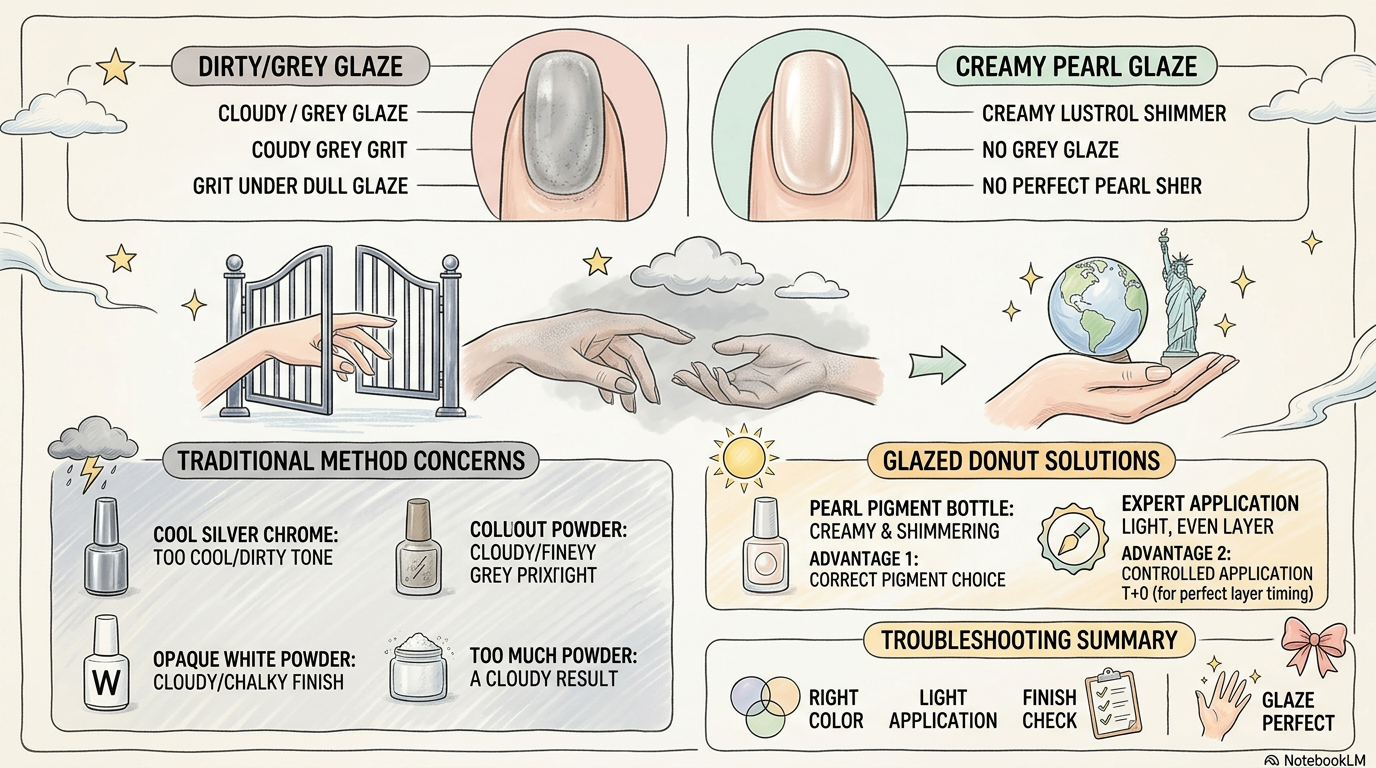
Why Glazed Donut Nails Turn Grey
This is one of the most common complaints, and it is usually fixable.
The grey cast often comes from one of these:
cool silver powder over a warm beige base; bright white base with too much chrome; low-quality powder with a dirty undertone; uneven buffing that leaves cloudy patches
Try this instead:
use a pearl powder rather than hard silver; keep the base a little sheerer; choose warm pink or beige if your skin tone runs warm; use less powder than you think
The classic glaze should look creamy, not smoky.
Why Glazed Donut Nails Peel So Fast
This usually has less to do with the trend and more to do with the sealing.
The weak points are:
uncapped edges; poor prep; too much powder at the tip; top coat that does not hold chrome well
If your glazed nails peel by day four, do not automatically blame the powder. Look at the top coat and the edge first.
The Best Glazed Donut Nails by Mood
You do not have to wear the trend one way.
Clean Everyday Glaze
Use a sheer pink base and a soft pearl top.
This is the version that works with jeans, tailoring, errands, and almost any makeup look.
Bridal Glaze
Use milky white or pale pink with a very fine pearl finish.
Short almond or soft oval shapes work best here because they keep the glow elegant.
Warm Nude Glaze
Use a beige, taupe, or caramel base.
This makes the trend feel more grown-up and less influencer-coded.
Colored Glaze
Use strawberry, chocolate, lemon, or lavender tones if you want something trend-led without leaving the glazed family.
The key is still restraint. The finish should glow. It should not read like full metallic chrome in disguise.
What to Ask for in the Salon
Be specific. The phrase "glazed donut nails" is now broad enough that two people can picture different sets.
Say:
the base tone you want: sheer pink, milky white, beige, chocolate; the finish you want: soft pearl, not mirror chrome; the shape you wear best; whether you want the set to look bridal, office-friendly, or more trend-forward
If you hate that grey cast some glazed sets get, say that too. It saves time.
How to Remove Glazed Donut Nails Without Beating Up the Nail
The glaze sits on top, but the real removal rule depends on what is underneath.
If it is gel, remove it like gel. If it is builder gel, treat it like builder gel. Do not keep filing until the shine is gone and then keep going because you still see a pearly flash.
Safer order:
File the top shine layer lightly.; Soak or wrap if the system underneath is soak-off.; Lift softened product carefully.; Re-wrap if needed.; Finish with oil.
The worst damage usually happens when people chase the last reflective trace instead of removing the system correctly.
The Best Glazed Donut Formula for Most People
If you want the version that fails least often, use a sheer pink or beige base, a fine pearl chrome, and a clean no-wipe top coat on a short oval or almond shape.
That gives you the soft glow people actually want when they save this trend. Not the harsh silver version. Not the gritty one. And not the set that looks tired before the weekend is over.