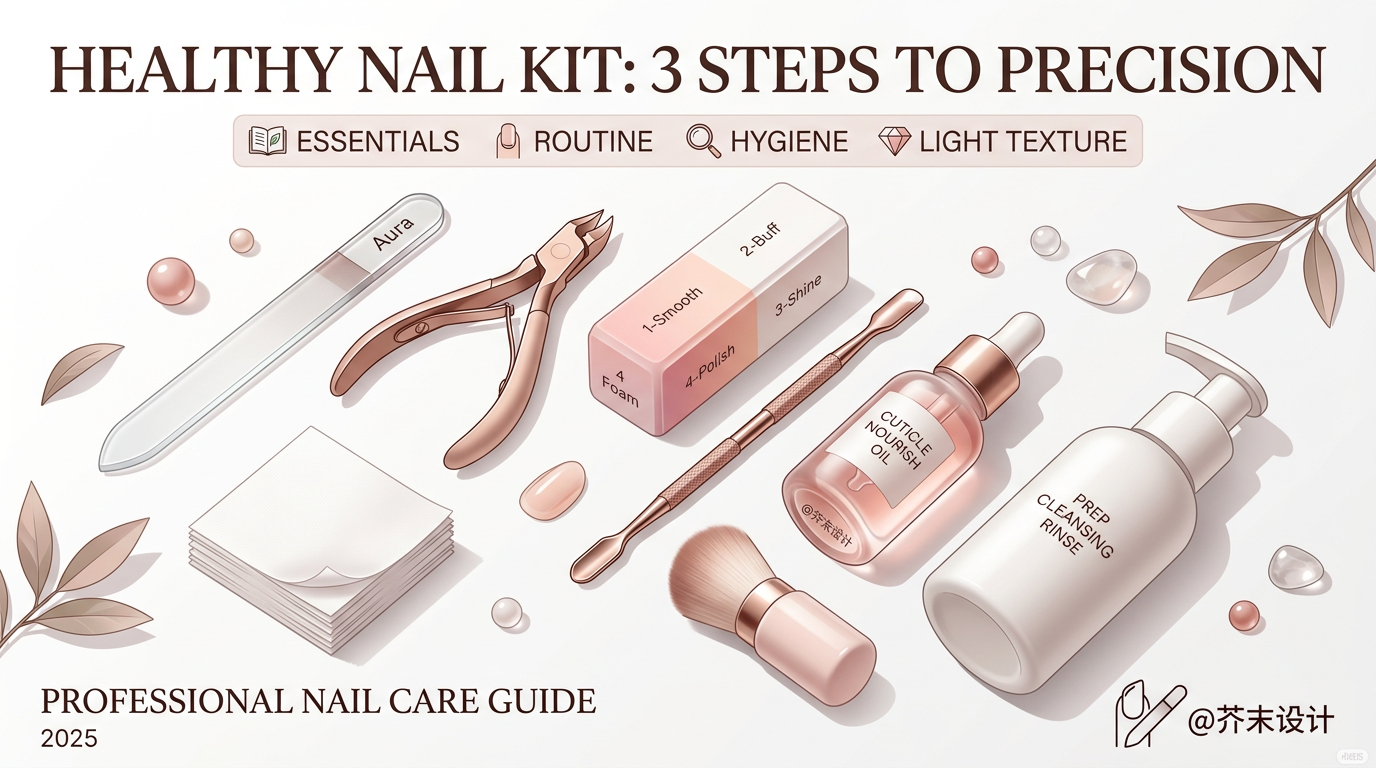
Most nail care tool lists have the same problem as bad nail art tool lists. They keep adding things until the reader cannot tell what matters.
Suddenly “basic nail care” means clippers, scissors, nippers, pushers, glass files, buffers, drills, lamps, sterilizers, oils, serums, trays, foot rasps, organizers, and a dozen extras that seem useful only after you have already spent too much money.
That is not a nail care routine. That is inventory.
For most people, nail care comes down to a smaller set of tools used in the right order, with decent hygiene and enough restraint not to overwork the nail. That is the part too many roundups skip. They tell you what exists. They do not tell you what deserves a place in a real home kit.
This guide breaks down the nail care tools that actually matter, how each one helps, what material quality is worth paying for, and what you can skip until there is a real reason to buy more.
The Short Answer
If you want a practical nail care kit, start with:
nail clippers; glass file; gentle buffer; cuticle pusher; cuticle oil; nail brush; remover or alcohol for cleanup; clean wipes or pads
If you do your own gel, builder, or heavy manicure work, then add more specialized tools. But for healthy nails, clean edges, and better polish results, that small kit does most of the work.
What Nail Care Tools Are Actually For
Nail care tools should do one of four jobs:
shorten the nail safely; shape the edge cleanly; manage dry skin around the nail; keep the tool area clean enough to avoid damage
Once you look at the kit that way, it gets easier to separate “useful” from “looks professional.”
A glass file has a clear job. A cuticle pusher has a clear job. A nail brush has a clear job. But a giant manicure set with nine cutting tools often creates overlap, not value.
The Core Nail Care Tools You Need First
This is the minimum set I would build first.
1. Nail Clippers
This is the fastest way to reduce length before shaping.
Good clippers should feel aligned, smooth, and predictable. If the cut feels jagged or crushes the edge before it cuts, that tool is working against you.
Use clippers for:
taking down long length; quick reshaping before filing; trimming broken corners before smoothing
Do not rely on clippers alone for final shape. They shorten. The file finishes.
2. Glass File
If you only upgrade one care tool, make it this.
A glass file is gentler than the cheap rough boards most people keep in a drawer forever. It gives you more control at the free edge and is usually easier on natural nails when used with light pressure.
Use it for:
refining the shape after clipping; smoothing rough edges; preventing the tip from feeling snaggy
This is one of the clearest quality upgrades in a home kit.
3. Gentle Buffer
A buffer helps when the nail surface is uneven, but it is one of the easiest tools to overuse.
Use it lightly. The point is to smooth, not thin the nail down out of habit.
Use it for:
reducing minor ridges before polish; smoothing leftover roughness after product removal; creating a more even surface when needed
If your nails are already thin, brittle, or peeling, buffer less, not more.
4. Cuticle Pusher
A cuticle pusher helps clear dead skin from the nail plate so polish sits better and the manicure looks cleaner.
It should not be used like a scraping weapon. Gentle pressure is enough. A good pusher makes the plate look tidy without leaving the nail sore afterward.
Use it for:
gently pushing back softened cuticle; clearing dead skin from the plate; improving polish placement near the base
For most home users, this does more good than a cuticle nipper.
5. Cuticle Oil
This is not optional if nail health is the goal.
People spend money on tools and skip the one product that keeps the skin and nail plate from feeling dry and crispy. Daily oiling helps the area stay more flexible, which matters if your nails peel, split, or look rough between manicures.
Use it for:
daily nail hydration; post-removal recovery; softer-looking cuticle area; reducing the dry, overworked look around the nail
6. Nail Brush
Simple. Useful. Underbought.
A small nail brush helps remove filing dust, product debris, and daily grime from around the nail. It is also part of basic hygiene if you do your own home manicures often.
Use it for:
removing filing dust; cleaning under the nail edge; brushing off debris before oil or polish
7. Wipes, Pads, and Basic Sanitizing Supplies
This is the least glamorous part of the kit. It still matters.
You need a clean way to wipe tools, remove dust, clean up the plate, and avoid reusing dirty tools over and over without thinking about it.
At minimum, keep:
lint-free wipes or cotton pads; alcohol or cleanser for wipe-downs; a clean dry place to store tools
That basic level of hygiene already beats the way a lot of home kits are handled.
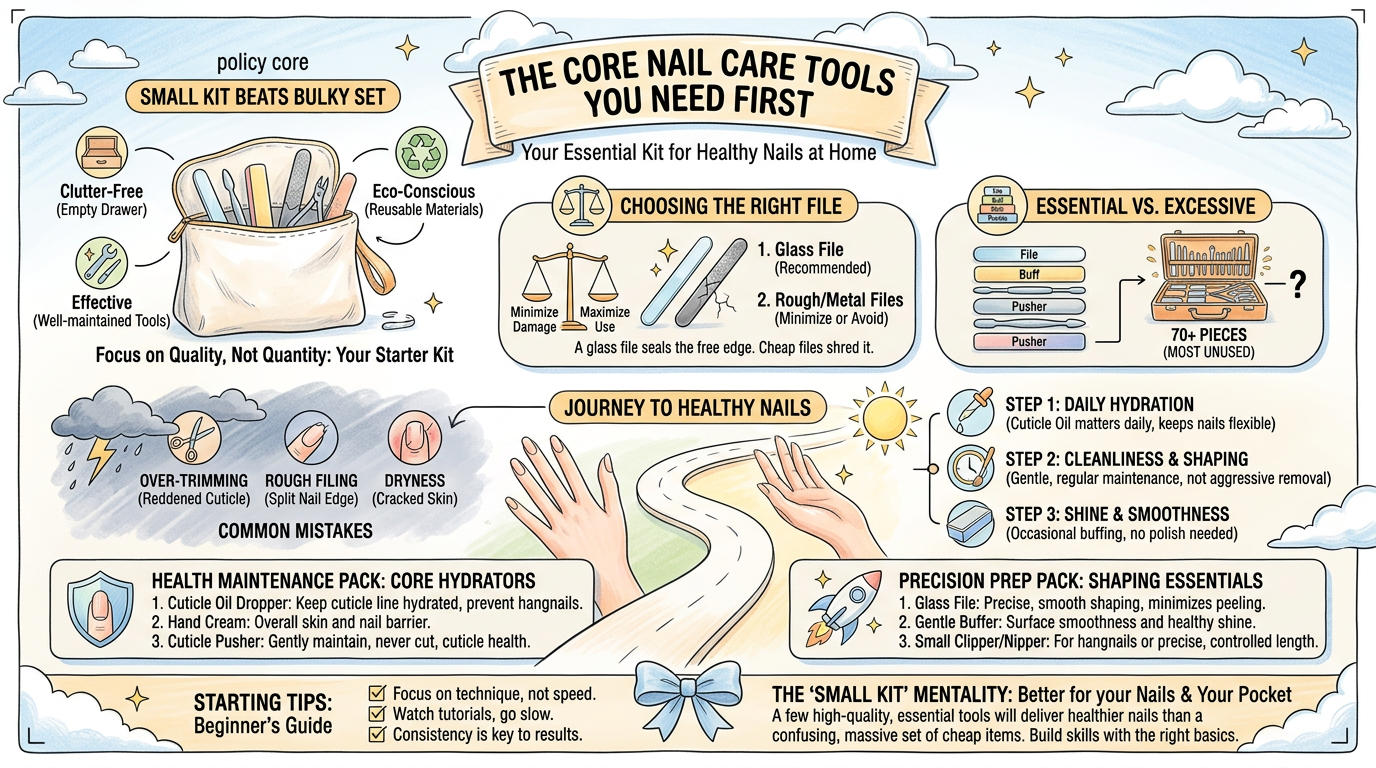
The Tools People Buy Too Early
This is where the shopping list gets inflated.
Most people do not need these first:
electric file; multiple nippers; cuticle scissors; UV sanitizer box; drill bit sets; heavy-duty callus tools in a nail-only kit; salon organizer systems
The problem is not that these tools are useless. The problem is timing. People buy advanced tools before they know how to use the basic ones gently.
Which Materials Are Worth Paying For
This is another area where weak content usually stops too early.
Stainless Steel for Metal Tools
For clippers, pushers, and nippers, stainless steel is still the safest default because it is durable and easier to clean.
You do not need to memorize steel grades to buy one decent home kit. You do need to avoid tools that feel loose, badly aligned, or sharp in the wrong places.
Glass for Files
Glass files are one of the few beauty-tool upgrades that are easy to feel in use. The edge usually feels smoother and more controlled than the cheapest disposable boards.
Grip and Handle Shape Matter Too
This gets skipped a lot.
A tool can be technically sharp and still annoying to use if the grip feels slippery or awkward. If you do your own nails often, handle comfort matters because shaky pressure leads to sloppy work.
The Right Order to Use Nail Care Tools
A small kit works better when the order makes sense.
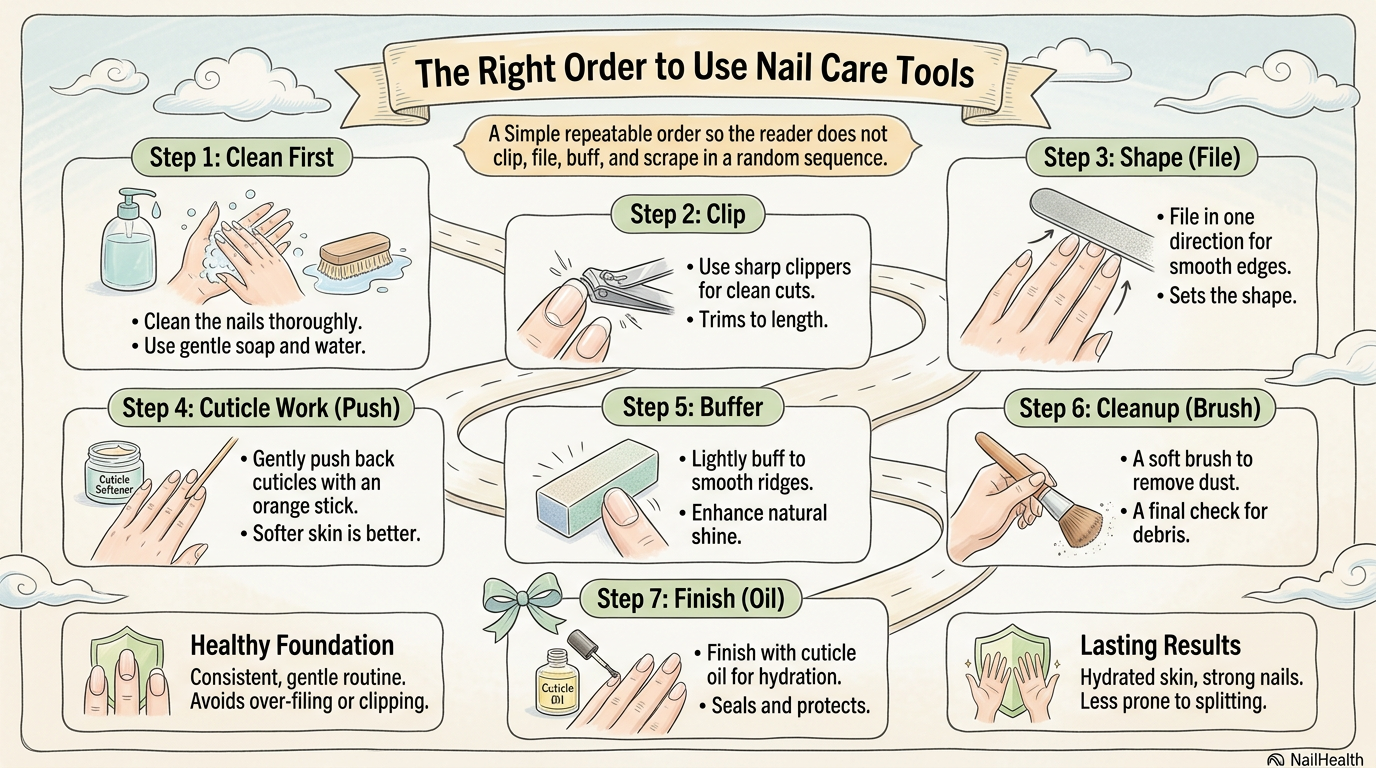
Use this sequence:
1. Clean the hands and nails; 2. Clip length if needed; 3. File the shape; 4. Soften and gently push back cuticle area; 5. Buff only where needed; 6. Brush away dust; 7. Finish with oil
That order keeps you from doing the common home-manicure mistake of filing, buffing, clipping, re-filing, and scraping in random loops until the nail feels overworked.
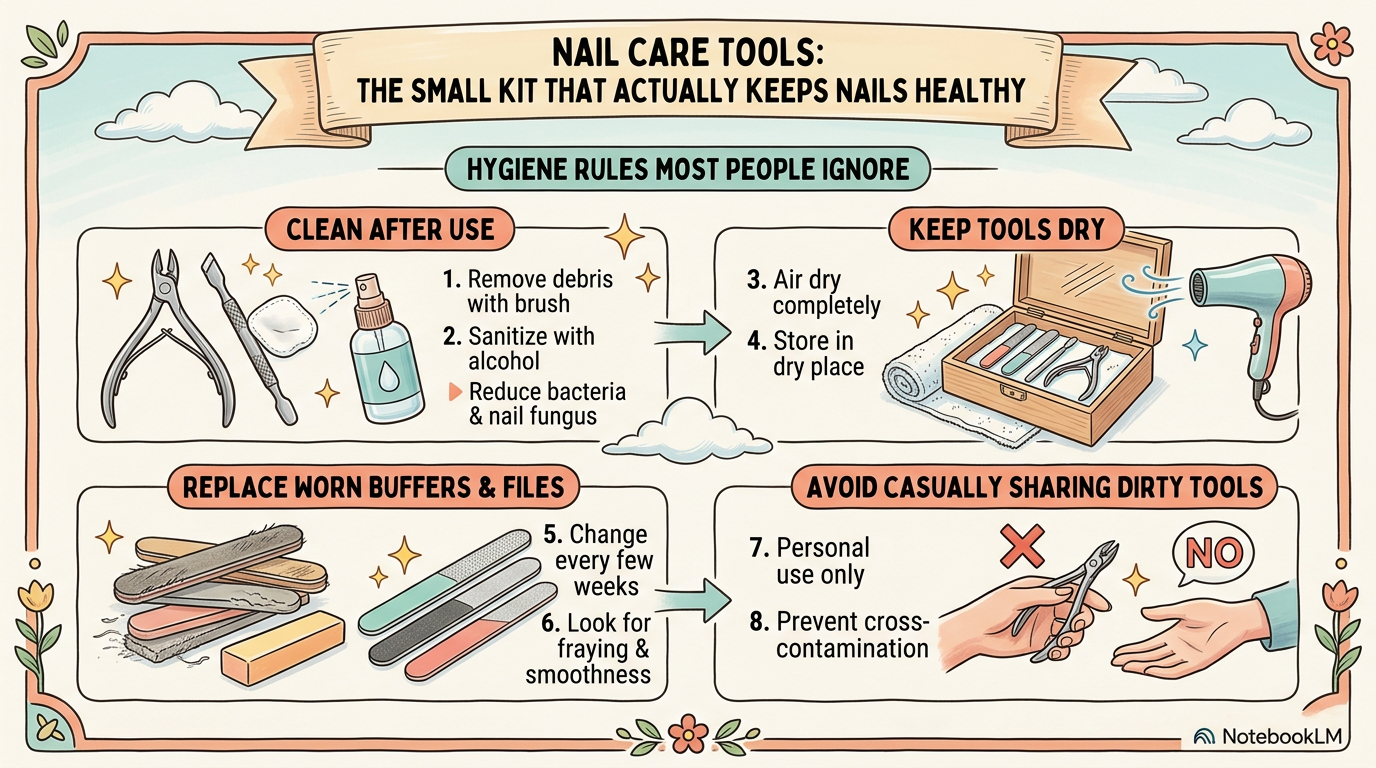
Hygiene Rules Most People Ignore
This is one of the biggest gaps in mainstream nail care content.
Home tools still need basic cleaning.
Clean After Use
Wipe tools down after every manicure session. Do not leave dust, product, and skin residue sitting on them for weeks.
Keep Tools Dry
Metal tools stored damp wear faster and feel worse over time.
Replace What Wears Out
Buffers stop performing well. Emery boards get tired. Old, grimy tools do not become “trusted favorites.” They become low-grade contamination risks.
Do Not Share Care Tools Casually
Even in a home setting, sharing cuticle or clipping tools without cleaning them first is sloppy.
You do not need salon sterilization theater for personal use. You do need common sense and consistency.
The Cuticle Nipper Question
This tool causes more trouble than it saves for some people.
A cuticle nipper is useful when there is true dead skin to trim. It is not a license to cut every bit of skin around the nail because you want the area to look extra clean.
For beginners:
buy one only if you know why you need it; use it sparingly; never chase live skin
If you are not sure what counts as dead cuticle and what counts as healthy skin, a pusher plus oil is often enough.
Nail Care Tools for Different Needs
This is where the kit starts to branch.
If Your Nails Peel Easily
Prioritize:
glass file; cuticle oil; gentle buffer used sparingly
The goal is less friction and more moisture.
If You Wear Polish Often
Prioritize:
cuticle pusher; nail brush; wipes; file
The goal is cleaner prep and cleaner removal.
If You Do Gel or Builder at Home
Add:
dedicated removal tools; more cleanup wipes; product-safe brushes
But keep the core care kit separate from the art or enhancement tools.
If You Want the Smallest Useful Kit
Buy:
clippers; glass file; cuticle pusher; oil; nail brush
That is the cleanest place to start.
The Most Common Tool Mistakes
This is where healthy nails quietly turn into overworked nails.
Over-Buffing
People mistake smoothness for health. A nail can feel smooth and still be thinned down too much.
Filing Aggressively
You do not need to saw at the edge like you are reshaping furniture. Lighter, more controlled filing usually gives a cleaner result.
Treating Cuticle Work Like Cleanup
The goal is neatness, not removal for the sake of removal.
Buying Sets Instead of Building a Kit
Large kits often hide weak quality behind quantity.
Ignoring Tool Maintenance
A dirty or worn-down tool does not become harmless because it is “only for home use.”
The Best Home Nail Care Kit, Plainly
If I had to build one simple kit today, it would be:
1. Nail clippers; 2. Glass file; 3. Soft buffer; 4. Cuticle pusher; 5. Cuticle oil; 6. Nail brush; 7. Wipes or pads; 8. Alcohol or cleanser for cleanup
That kit covers the care side of healthy nails without drifting into salon gear you may never use.
Final Verdict
The best nail care tools are not the ones that make your kit look the most complete. They are the ones that keep your nails shaped, clean, hydrated, and less damaged between manicures.
For most people, a small care kit beats an oversized manicure set. Start with clippers, a glass file, a gentle cuticle tool, oil, and basic hygiene supplies. Add more only when your routine gives you a reason.
That is how you build a nail care kit you will actually use.